Field note · January 12, 2026
The Leadership Growth System Most Mid-Career Leaders Miss
By Todd McKeever
I watched a regional director stare at his coffee for 15 seconds after I asked him a simple question.
“What have you learned in the last six months that changed how you lead?”
The silence told me everything.
He was competent. His team respected him. His numbers were solid. However, he’d stopped growing three years ago and didn’t know it. Success had created comfort. Consequently, comfort killed curiosity. He was managing what he knew instead of learning what he needed.
Most mid-career leaders face the same trap. You’re experienced enough to coast. Busy enough to justify it. Comfortable enough to call it wisdom. Nevertheless, stagnation doesn’t announce itself. It arrives quietly, disguised as stability.
You’re Consuming Content, Not Growing
The podcast plays while you drive, but you retain nothing. Meanwhile, the book sits on your nightstand, half-read. Furthermore, the course you bought collects digital dust.
You consume information constantly but never process it. Therefore, you’re not learning. You’re hoarding.
Mid-career leadership is littered with people who have 20 years of experience that’s really one year repeated 20 times. The pattern is predictable. First, you hit a certain level. Then, you master the role. Next, you build systems that work. Finally, you stop building.
As a result, you manage what exists instead of creating what’s next.
Success makes you dangerous. Not because you become arrogant, but because you become comfortable. Consequently, you stop asking questions because you already have answers. Similarly, you stop learning because you’re already teaching.
Information without reflection is noise. In addition, the mind becomes a storage unit instead of a workshop. Nothing compounds because nothing connects.
Growth requires friction. Moreover, reflection creates that friction. However, most leaders avoid it because it’s uncomfortable to admit what they don’t know.
Are you consuming or growing?
That question separates leaders who plateau from leaders who compound.
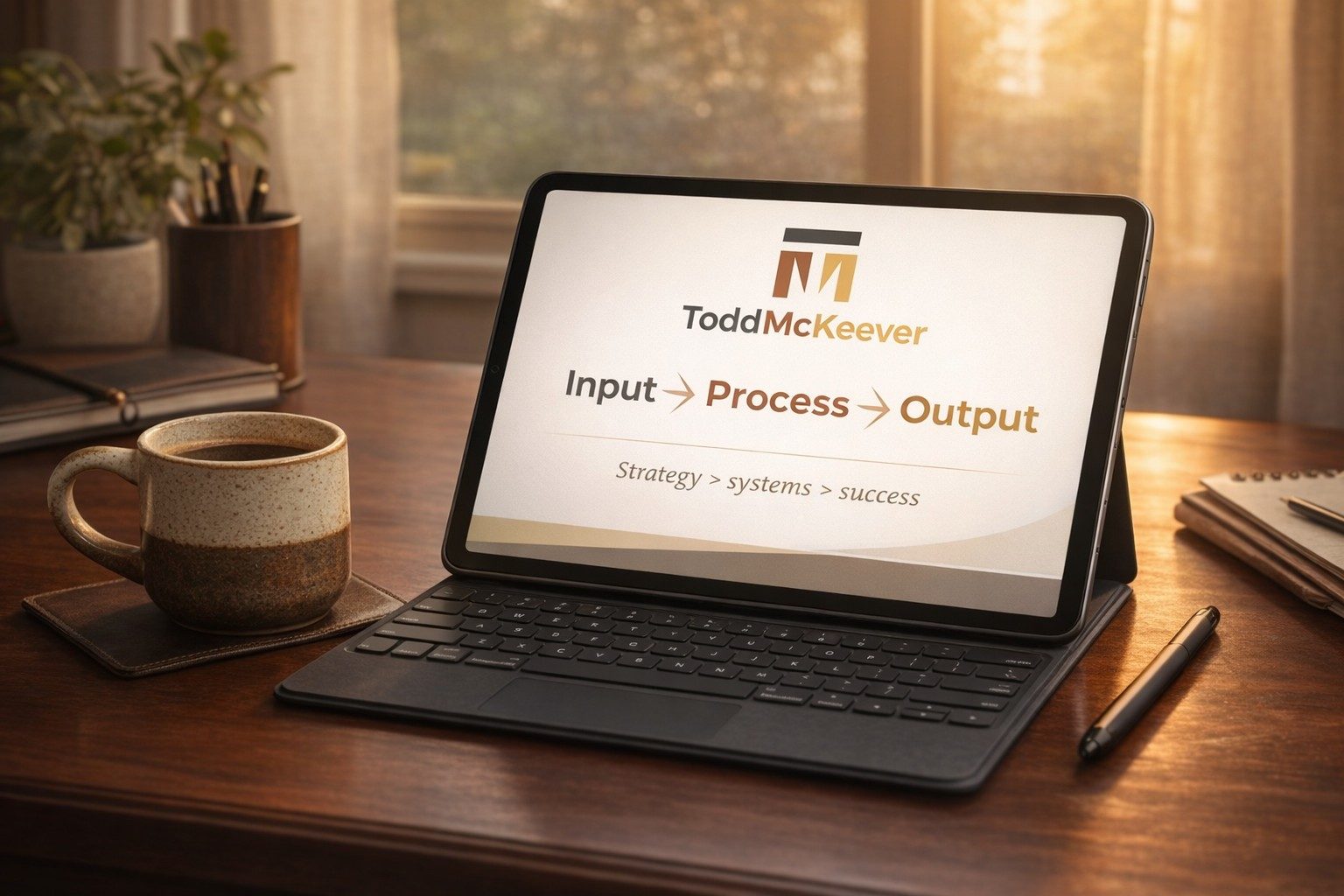
The Growth Triad: Input, Process, Output
Growth isn’t mystical. It’s mechanical. A true leadership growth system has three parts. Skip one and you’re just consuming content. However, complete all three and wisdom compounds over time.
Input: What You Consume
Your growth starts with what you feed your mind. Quality beats quantity every time.
The leader who listens to 50 podcasts monthly and remembers nothing grows slower than the leader who listens to five with intention. Therefore, intentional input requires curation.
If it doesn’t challenge your thinking, cut it. Similarly, if it doesn’t apply to your role, skip it. Furthermore, if it’s just noise to fill the commute, turn it off.
Feed your mind like you’d fuel a high-performance engine. Premium only.
I use apps like Snipd for podcasts and Readwise for articles. Additionally, I use Shortform to get detailed book summaries instead of reading full books when time is tight. In fact, I’ve built an entire detailed book summary folder that covers the frameworks and systems from the books that have shaped my leadership. Consequently, my supporters get free access to these summaries because understanding the core ideas matters more than finishing every page.
The tools matter less than the system. Nevertheless, the critical question remains: What are you consuming that makes you better, not just busier?
Early in ministry, I consumed everything. Sermons, leadership books, conference talks, theology podcasts. I was learning constantly but growing slowly because I never paused to ask what mattered.
Then I got selective. As a result, I cut half my input and doubled my growth. Less volume, more impact.
Process: How You Reflect
Information becomes insight through reflection. This is where most leaders fail.
You consume brilliantly. You execute effectively. However, you never pause to connect what you learned to what you lead. Therefore, reflection is the space between knowing and wisdom. Without it, you’re just accumulating facts.
Processing doesn’t require hours. Instead, it requires consistency. Fifteen minutes at the end of the day. A journal entry. A brief review. What did I learn today? How does it apply tomorrow? Consequently, what pattern am I seeing?
Day One (my personal favorite) works. A notes app works. A physical journal works. The medium matters less than the habit. Furthermore, leaders who process what they consume grow exponentially. In contrast, leaders who don’t repeat themselves endlessly.
Reflection turns noise into signal. Moreover, it’s the filter that separates content from competence.
For 35 years in ministry, I collected ideas but rarely connected them. I had notebooks full of sermon prep, leadership principles, pastoral insights. Nevertheless, they stayed siloed. It wasn’t until I started reflecting systematically that patterns emerged. As a result, the same leadership principles I’d taught in church applied to business. Similarly, the pastoral frameworks I’d used for crisis management worked in coaching.
Reflection connected what I already knew into systems I could teach.
Output: What You Create
You learn by teaching. Teaching forces clarity. Therefore, clarity creates growth.
This is the part most leaders skip because it feels optional. However, it’s not. Output isn’t about building an audience or becoming a thought leader. Instead, output is how you clarify what you think you know.
Write a blog post.
Send a newsletter. Teach your team. Explain the concept to a colleague. The act of articulating forces precision. Consequently, you discover gaps in your understanding. Furthermore, you refine your thinking. As a result, you compound your learning.
I didn’t master 35 years of ministry experience until I started teaching it in a new context. Coaching forced me to clarify what I’d been doing intuitively. Then, teaching it sharpened it. Finally, creating content from it multiplied its impact.
Output transforms knowledge into wisdom. It’s the final step that most leaders never do.
How to Build Your Leadership Growth System This Week
Most leaders know they should grow. However, few leaders have a leadership growth system. Here’s how to build one.
Step 1: Audit Your Input
Review your last 30 days. First, list everything you consumed: podcasts, books, articles, courses. Next, circle only what changed your thinking or improved your leadership.
If the list is short, your input needs curation.
Cut half of what you consume. Be ruthless. Premium inputs only.
Step 2: Create Processing Time
Block 15 minutes at the end of each day. Then, set a recurring appointment. Furthermore, protect it like you’d protect a client meeting.
Answer three questions in writing:
- What did I learn today?
- How does it apply to my current challenge?
- What pattern am I seeing?
The medium doesn’t matter. However, the consistency does.
Step 3: Teach What You Learn
After consuming your next podcast, article, or book chapter, pause for 15 minutes.
Answer three questions:
- What’s the main idea?
- How does it apply to my current challenge?
- Who needs to hear this insight from me?
Then share it with someone. Text a teammate. Write a note. Teach it at your next meeting.
As a result, you’ll discover what you actually understood versus what you thought you knew.
The Thing Beneath the Thing
Here’s what most leaders miss about a leadership growth system: It doesn’t happen when you have margin. Instead, growth creates margin.
The stagnant leader is always busy because they solve the same problems repeatedly. They haven’t learned better systems. They haven’t developed new skills. Consequently, they manage crises instead of preventing them.
In contrast, the growing leader invests time in becoming better. They read deeply instead of scrolling endlessly. Furthermore, they reflect intentionally instead of reacting constantly. Similarly, they teach what they learn instead of hoarding what they know.
That investment compounds. Better thinking creates better decisions. Then, better decisions create better outcomes. Next, better outcomes create capacity. Finally, capacity creates time for more growth.
It’s a flywheel. However, it requires the initial push.
The leader who says “I don’t have time to grow” has it backward. They don’t have time because they’re not growing. Therefore, stagnation is expensive. In contrast, growth is the investment that pays the highest return.
Closing Thoughts
Growth doesn’t add more to your plate. It upgrades the plate. New skills eliminate old struggles. Better frameworks replace outdated systems. Moreover, wisdom prevents the fires that busyness creates. The leaders who grow aren’t special. They’re systematic. Input. Process. Output. Repeat. It’s not glamorous. However, it’s compounding.
P.S. Want frameworks like this delivered to your inbox every week? I break down 401-level leadership systems in my free newsletter. Subscribe at toddmckeever.com.
Stay in the work
Join Free
Join free for Tuesday teaching that helps you see what is happening and all the free content. Public writing remains open without an email.